Payout Percentages Decoded: Navigating RTP in Britain's Online Slot Landscape
Written by Leon Carter · Mar 30, 2026
Payout Percentages Decoded: Navigating RTP in Britain's Online Slot Landscape
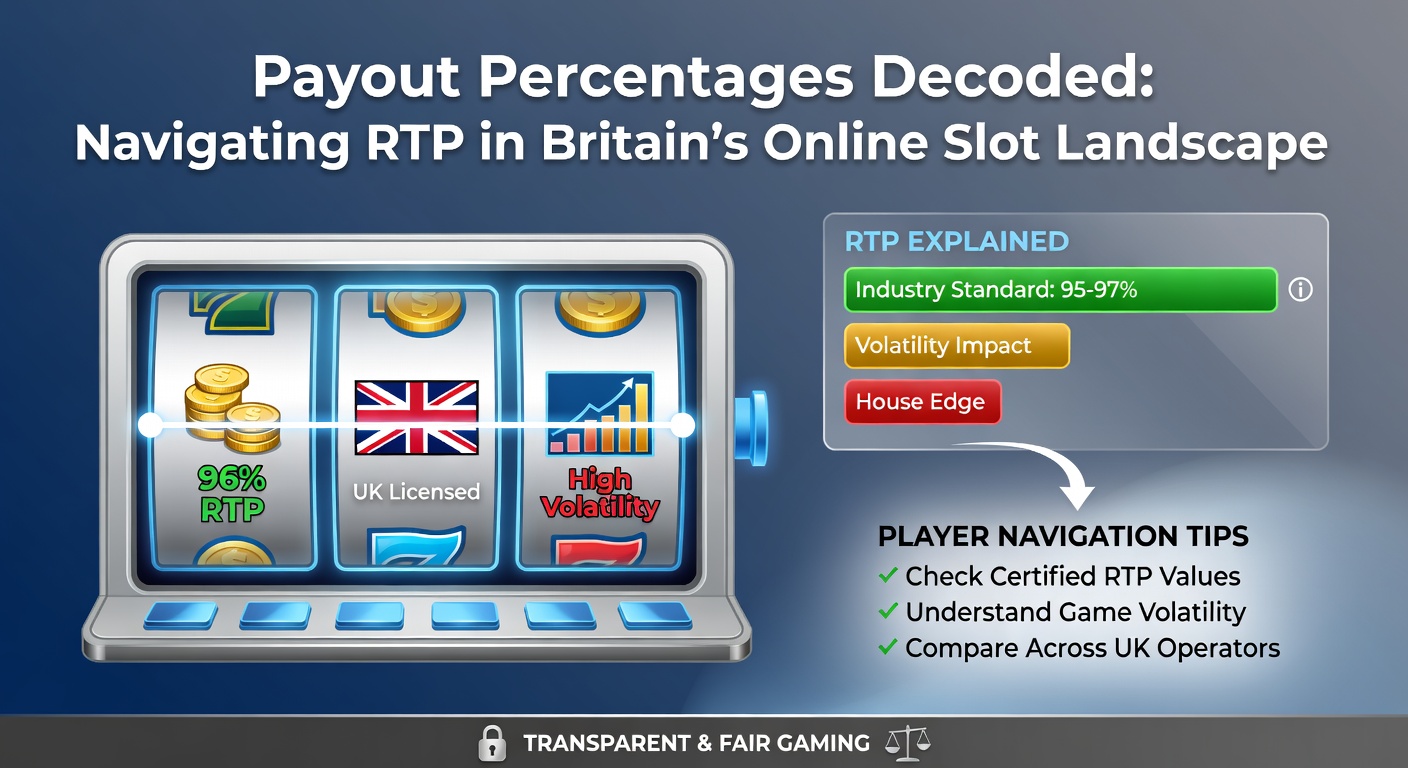
Online slots have exploded in popularity across Britain, drawing players with vibrant themes, bonus rounds, and the thrill of potential wins, yet beneath the flashing lights and immersive soundtracks lies a key metric that shapes every spin: Return to Player, or RTP. This percentage, often hovering between 92% and 98% for many titles, represents the theoretical amount a game returns to players over millions of spins, while the house edge claims the rest; experts emphasize that grasping RTP helps players make informed choices amid the sea of options available on UK-facing platforms.
What's interesting is how RTP varies not just by game but by provider and jurisdiction, creating a landscape where savvy observers spot patterns in payout structures that influence long-term play; data from industry audits reveals that slots with higher RTPs tend to deliver more consistent returns, although short-term results swing wildly due to volatility.
Unpacking RTP: The Basics Every Player Should Know
RTP stands for Return to Player, a figure expressed as a percentage that indicates how much of all wagered money a slot game pays back to players over time; for instance, a 96% RTP means that, theoretically, for every £100 staked across countless sessions, £96 returns to players in wins, with the remaining 4% fueling the operator's edge. Developers embed this into the game's math model during design, simulating billions of spins to ensure the figure holds up under scrutiny.
But here's the thing: RTP isn't a promise for individual sessions—it's a long-game average, so one player might hit a jackpot on the first spin while another endures a dry spell over hours; researchers who've analyzed slot data note that this disconnect trips up newcomers, who chase short-term luck rather than statistical reality.
Take classic examples like NetEnt's Starburst, clocking in at 96.09%, or Play'n GO's Book of Dead at 96.21%; these figures, verified through independent testing, show how established providers prioritize competitive payouts to stand out in Britain's crowded market, where players sift through hundreds of titles daily.
How RTP Gets Calculated, Tested, and Certified
Game studios craft RTP through complex algorithms that govern paylines, symbol frequencies, and bonus triggers, running simulations until the payout stabilizes; once coded, third-party labs like iTech Labs step in, subjecting the software to rigorous trials that mimic real-world play over millions of rounds. Certifications follow only if results align with declared RTPs, a process that catches discrepancies before launch.
Observers point out that progressive jackpot slots often dip lower—say, 88-92%—because a portion of each bet feeds the growing prize pool, shifting the balance toward those rare massive hits; studies from gaming labs confirm this trade-off, where the allure of life-changing sums justifies the adjusted math.
And while platforms display RTPs in game info or help sections, discrepancies arise if operators tweak settings per region, although audits enforce consistency; one case saw a provider fined after variance surfaced in testing, underscoring the stakes involved in accurate reporting.
Britain's Slot RTP Landscape: Numbers and Trends
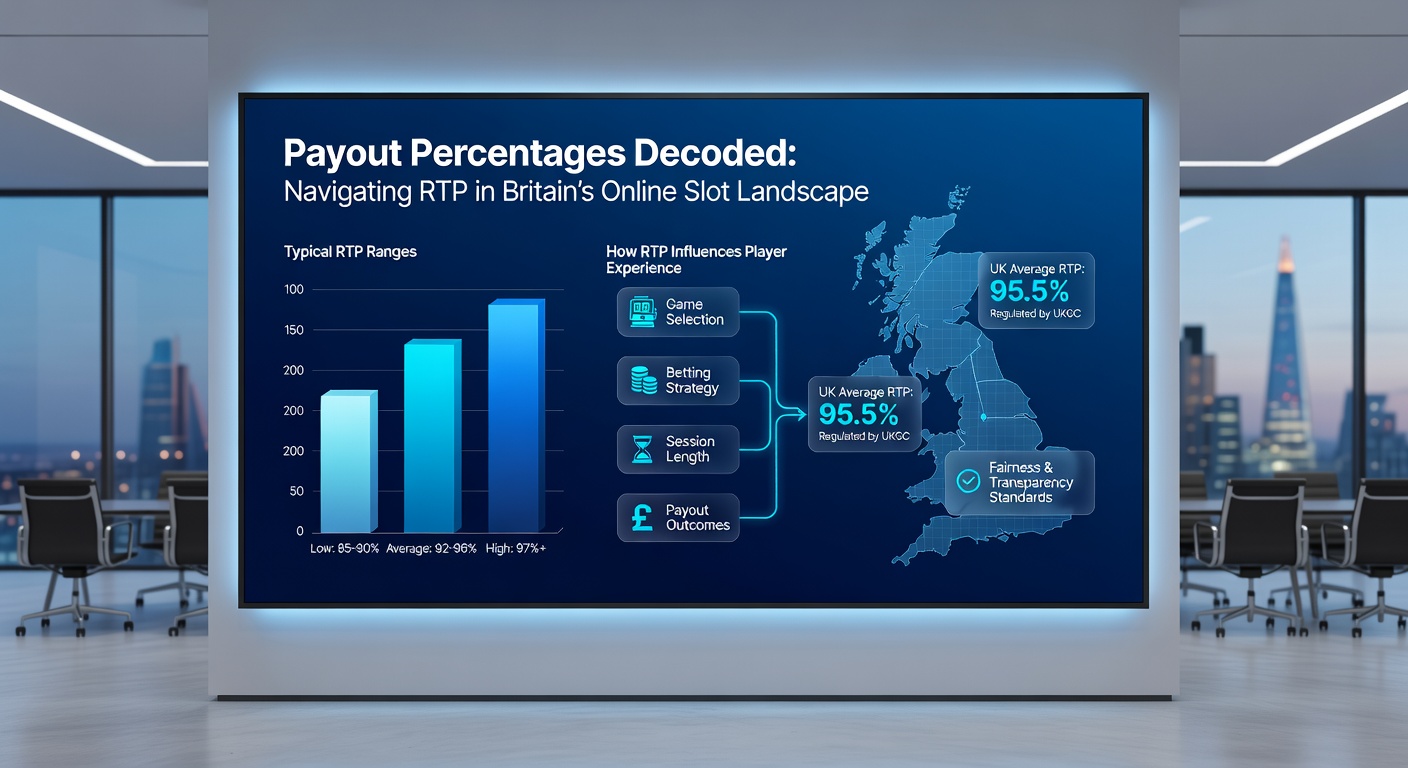
Average RTPs for UK online slots cluster around 94-96%, with low-volatility games pushing toward 97% or higher to appeal to steady players, while high-volatility beasts like Gonzo's Quest Megaways (95.77%) cater to risk-takers chasing cascades of multipliers. Figures from platform aggregators reveal that Megaways mechanics, popularized by Big Time Gaming, maintain solid RTPs despite their explosive potential, blending cluster pays with expanding reels for sustained engagement.
Turns out, mobile-optimized slots show no RTP drop-off, as developers unify math models across devices; data indicates that touch-friendly titles from Pragmatic Play, such as Sweet Bonanza (96.48%), perform identically on phones and desktops, reflecting the shift toward anytime play in Britain.
Factors That Shift RTP Across Slots and Providers
Volatility plays a starring role alongside RTP, with low-volatility slots offering frequent small wins to match their higher percentages, whereas high-volatility counterparts hoard payouts for explosive sessions, often at slimmer RTPs; experts observe that jackpot-linked games sacrifice 2-5% to fund progressives, creating hybrids where base RTP sits at 90% but bonus buys nudge it up.
Buy-a-bonus features add another layer, letting players pay extra for instant access to free spins or multipliers, effectively boosting session RTP temporarily; one study highlighted how these options in games like Money Train 2 (96.50% base) let skilled players optimize returns based on bankroll size.
Provider differences shine through too—Microgaming's Immortal Romance (96.86%) exemplifies high RTP storytelling, while Novomatic's adaptations hover nearer 95%, reflecting varied philosophies in a market where competition drives incremental gains; regional tweaks, though rare, ensure compliance with local standards without altering core math.
It's noteworthy that branded slots, tied to films or celebs, sometimes lag at 92-94% due to licensing costs eating into margins, a pattern data from aggregator sites consistently uncovers.
Smart Navigation: Spotting and Leveraging RTP Data
Players often start by checking game lobbies for RTP listings, then cross-reference with review sites or demo modes to verify; those who've mastered this report better session management, focusing on 96%+ titles for marathon play rather than chasing unverified jackpots. Tools like slot trackers on apps log personal stats against theoretical RTP, revealing how variance plays out over time.
So, pair high RTP with low volatility for grind-it-out wins, or high RTP high-vol for boom-or-bust thrills; case studies from player forums show groups forming around 97% RTP megaways slots, pooling data to predict hot streaks, although randomness reigns supreme.
Demo play proves invaluable here, letting testers sample RTP in action without risk; platforms mandate these free versions, giving Britain’s slot enthusiasts a sandbox to decode payout rhythms before committing cash.
Global Oversight Shapes UK RTP Standards
While Britain's scene thrives under layered regulation, international bodies set benchmarks that ripple across borders; the Malta Gaming Authority, overseeing many UK-accessible operators, mandates RTP disclosures and lab audits, ensuring figures like 95%+ hold through quarterly reviews. Similarly, Nevada's Gaming Control Board enforces parallel transparency in its jurisdiction, with reports showing average slot RTPs stabilizing at 92-97% via public filings that influence global developers.
Industry groups like the eCOGRA conduct seal programs, certifying RTP integrity for licensed sites and publishing aggregate data that UK players reference indirectly; these efforts create a web of accountability, where one jurisdiction's rigor elevates standards everywhere.
Academic analyses from places like the University of Nevada's gaming research reinforce this, with papers detailing how certified RTPs correlate to player retention, a metric platforms track obsessively.
Glimpsing Ahead: RTP Evolutions by March 2026
By March 2026, AI-driven personalization promises to tweak RTP displays in real time based on play history, though core math remains fixed; prototypes from providers hint at dynamic volatility sliders within games, letting users dial RTP impacts per session without breaching fairness rules. Blockchain verification emerges too, with provably fair slots logging every spin's RTP contribution on public ledgers, a trend gaining traction in trials across Europe.
Data suggests these innovations could lift average RTPs to 96.5% industry-wide, as competition heats up; observers note early adopters like Evolution Gaming integrating them into live-linked slots, blending RTP transparency with dealer-hosted spins for a hybrid future.
Yet challenges loom, like ensuring mobile AI doesn't skew equity, prompting labs to ramp up stress tests ahead of widespread rollout.
Conclusion
Navigating RTP in Britain's online slot world boils down to decoding percentages, weighing volatility, and tapping verified data for smarter spins; from 96% staples to progressive dips, the landscape offers choices for every style, backed by global audits and emerging tech. Players who prioritize these metrics uncover sustainable play patterns amid the reels' chaos, turning theoretical edges into practical insights that endure session after session.
That's where the rubber meets the road—RTP isn't just a number, it's the compass guiding Britain's slot enthusiasts through an ever-evolving playground of payouts and possibilities.