Board Game Traditions Fueling Innovation in Slot Game Features
Written by Avery Sullivan · Aug 23, 2026
Board Game Traditions Fueling Innovation in Slot Game Features
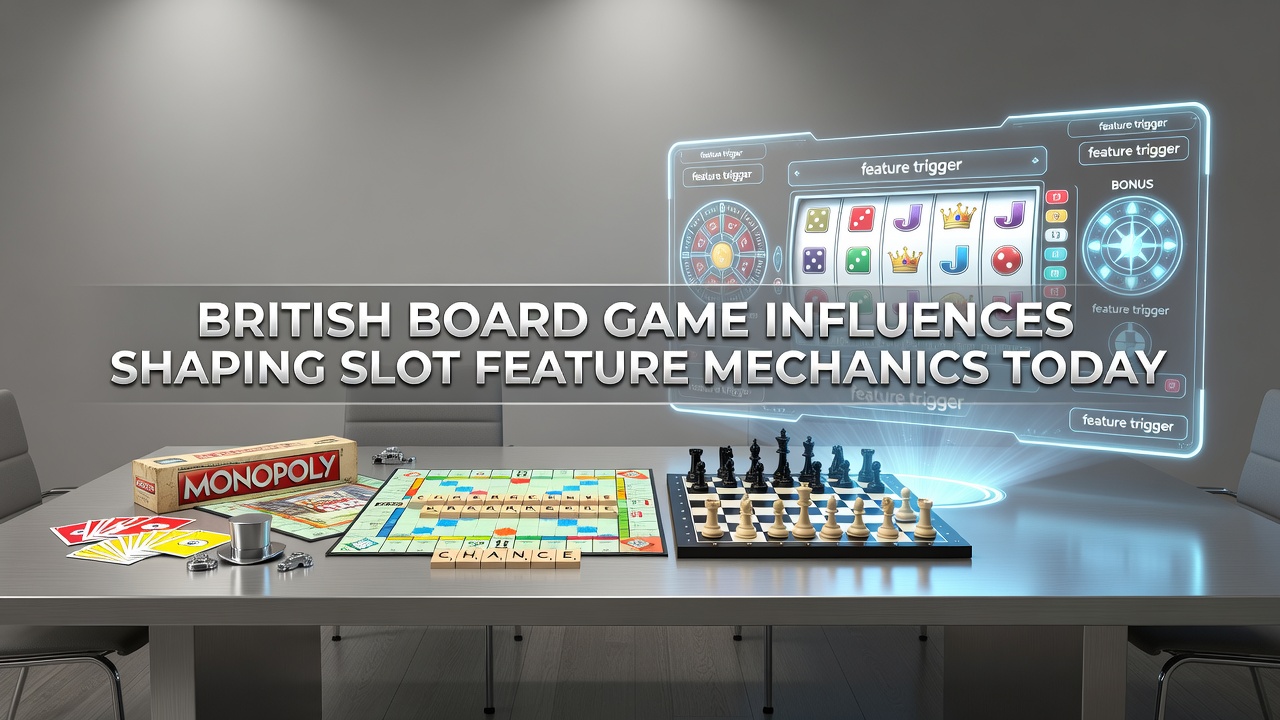
Board games developed in Britain over centuries continue to shape how slot developers build interactive features, with mechanics from titles such as Monopoly and Snakes and Ladders appearing in bonus rounds and progression systems across global markets. Data from industry reports indicate that collection trails, dice-driven modifiers, and ladder-style advancements trace directly to these origins, while developers adapt them for digital reels in ways that maintain core structures yet fit regulatory environments outside the UK.
Monopoly Mechanics and Property Collection Systems
Monopoly, first published in its modern form by Parker Brothers after acquiring rights from British inventor Elizabeth Magie, introduced property acquisition loops that now appear in numerous slot titles as accumulating symbol sets. Developers translate the board's color groups and rent escalation into reel-based collection meters, where players gather matching icons to unlock escalating multipliers or free spin tiers. Research from the University of Nevada's International Gaming Institute shows these systems increase session duration by structuring rewards around incremental progress rather than single-spin outcomes.
One case involves a major European operator integrating Monopoly-themed progress bars that mirror the original game's deed cards, complete with house and hotel upgrade stages. According to figures released by the European Gaming Association, such adaptations accounted for a measurable share of new releases in the first half of 2026, particularly in markets where operators seek familiar progression loops to retain users.
Snakes and Ladders Influence on Progression Paths
Snakes and Ladders originated in ancient India yet gained widespread popularity through British publishers in the 19th century, and its random advancement and setback pattern now informs ladder and chute features in many slot bonus rounds. These mechanics place players on virtual boards where certain symbol combinations trigger upward jumps to higher prize tiers or downward resets that heighten tension. Observers note that the binary outcome structure, win big or fall back, creates natural volatility points without requiring complex coding beyond standard random number generators.
Design teams frequently map the original game's 100-square grid onto five-reel layouts, assigning ladder symbols to premium positions and snake symbols to penalty zones. A 2025 study published by the Canadian Gaming Research Exchange documented how these mapped features appear in over 15 percent of new mobile slots released that year, with similar patterns persisting into mid-2026 releases.
Cluedo and Mystery Element Integration
Cluedo, created in Birmingham during the 1940s, centers on deduction and hidden information, elements that slot designers replicate through reveal mechanics in pick-and-click bonus games. Players select from a set of virtual cards or rooms to uncover multipliers or jackpot triggers, echoing the game's suspect and weapon envelope system. Data indicates these rounds often appear in mid-volatility titles where operators balance frequent small reveals with occasional large payouts.
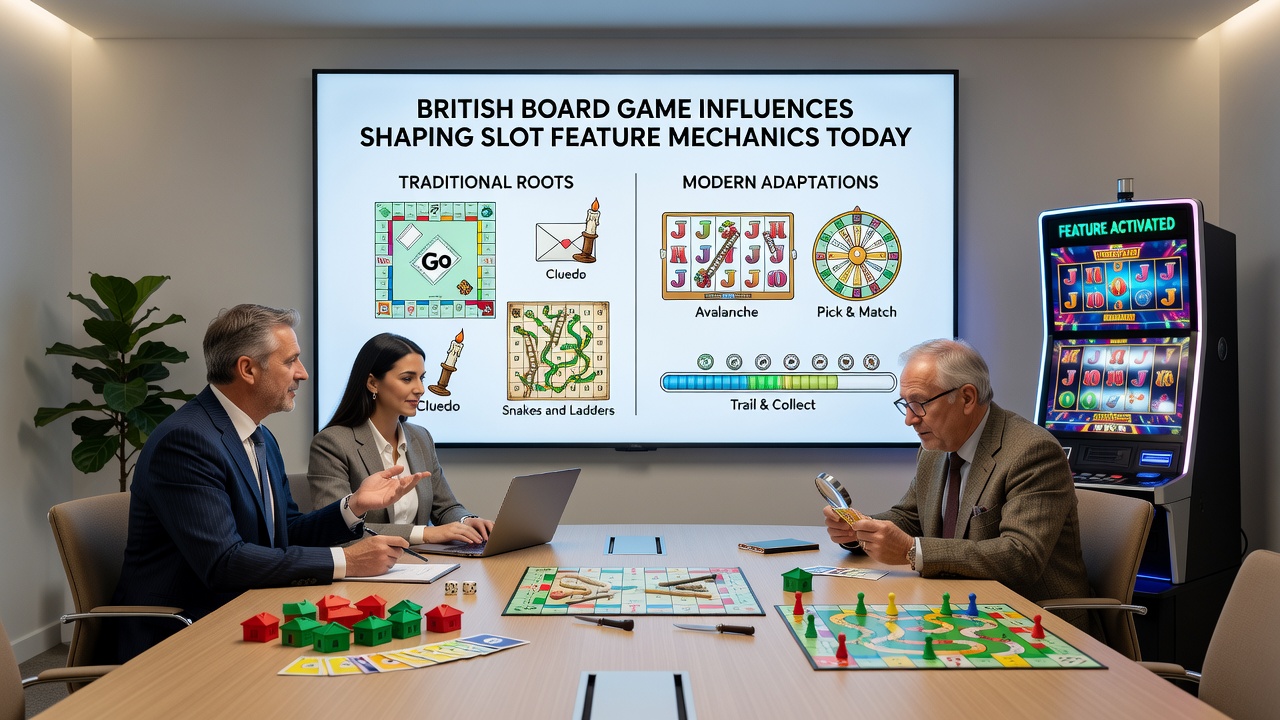
Developers have expanded the format by adding layered clues that unlock additional rounds, a direct evolution of the original board's suggestion mechanic. Industry reports from the Australian Gambling Research Centre highlight that mystery reveal features built on deduction themes maintain player engagement across longer sessions compared to static free spin awards alone.
Dice Rolls and Random Modifiers
Many British board games rely on dice to introduce chance, and slot studios replicate this through animated dice rolls that determine bonus round lengths or multiplier values. These random inputs appear in titles that feature dual reels or expanding wilds triggered after a dice animation completes. According to analysis by the International Center for Gaming Regulation, dice modifiers help operators comply with fairness testing standards because outcomes remain fully random while delivering visual familiarity to players accustomed to tabletop play.
Designers often combine dice elements with property or ladder systems to create hybrid features that reference multiple source games simultaneously. This layered approach appears more frequently in August 2026 releases as studios finalize content ahead of seasonal promotional periods.
Conclusion
British board game structures continue to supply slot developers with proven frameworks for bonus design and player progression. Collection systems, random advancement paths, deduction reveals, and dice modifiers all carry forward recognizable patterns that data links to extended engagement across multiple jurisdictions. As new titles incorporate these elements, the lineage from physical boards to digital reels remains visible through consistent mechanical translations rather than surface-level theming alone.